
Grades & Growth Academic Calendar 2026/27

Explore Our Course Cycles
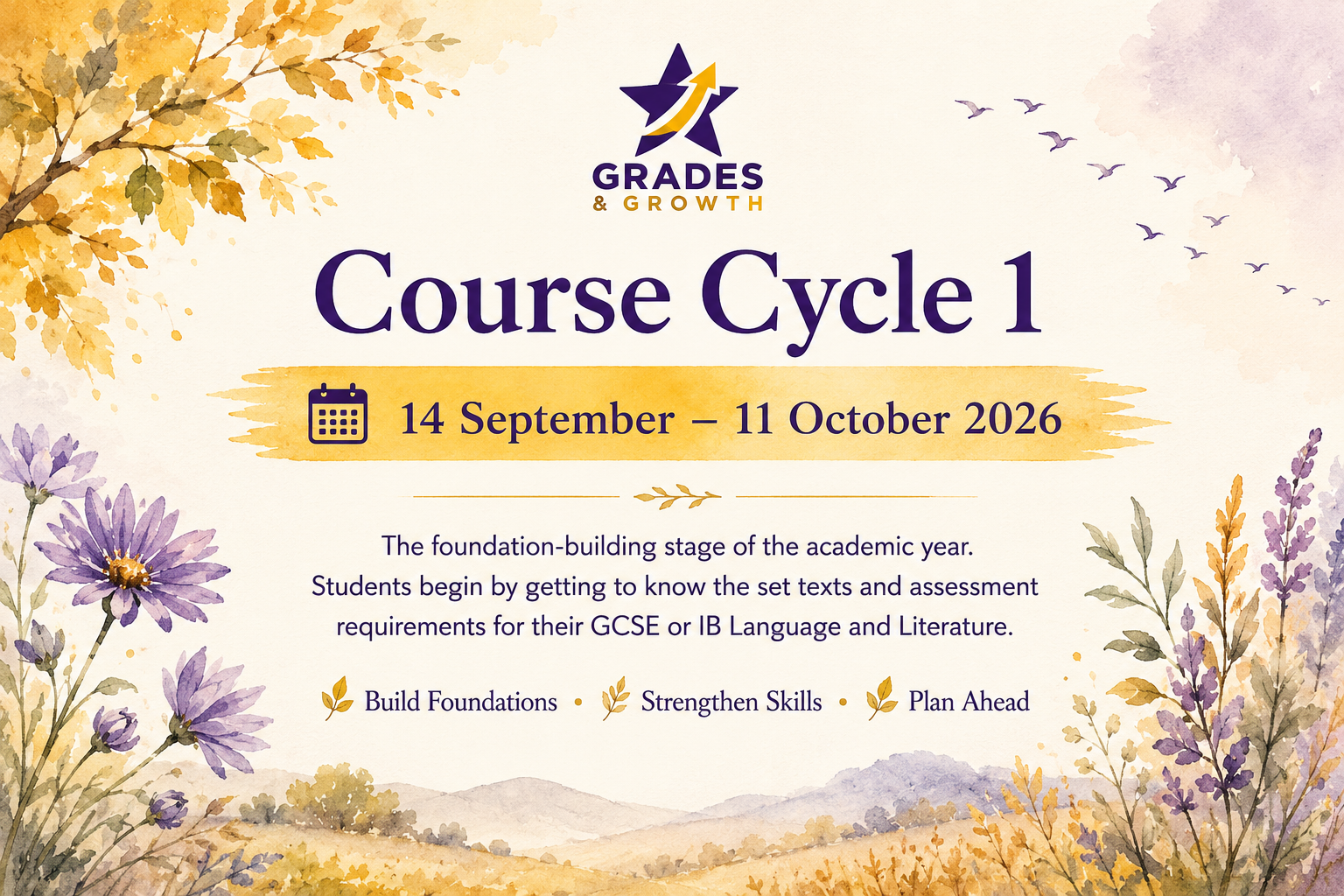
Course Cycle 1
Course Cycle 1 is the foundation-building stage of the academic year. Students should begin by becoming familiar with the set texts, assessment requirements and expectations for their GCSE or IB Language and Literature courses.
At this point, the priority is to identify strengths, uncover weaknesses and begin turning those weaknesses into areas of control. Students who struggle with essay structure, organisation, analysis or word choice may need more time to think and write carefully before speed becomes the focus.
For this reason, Course Cycle 1 gives students space to hone the quality of their writing first. They can practise planning, paragraph development, textual analysis and precise expression with the time they need. Later course cycles can then place greater emphasis on writing more efficiently and confidently within examination time limits.
This is also an important period for establishing stronger study habits, understanding what each paper requires and building the academic foundations that later revision and exam practice will depend on.
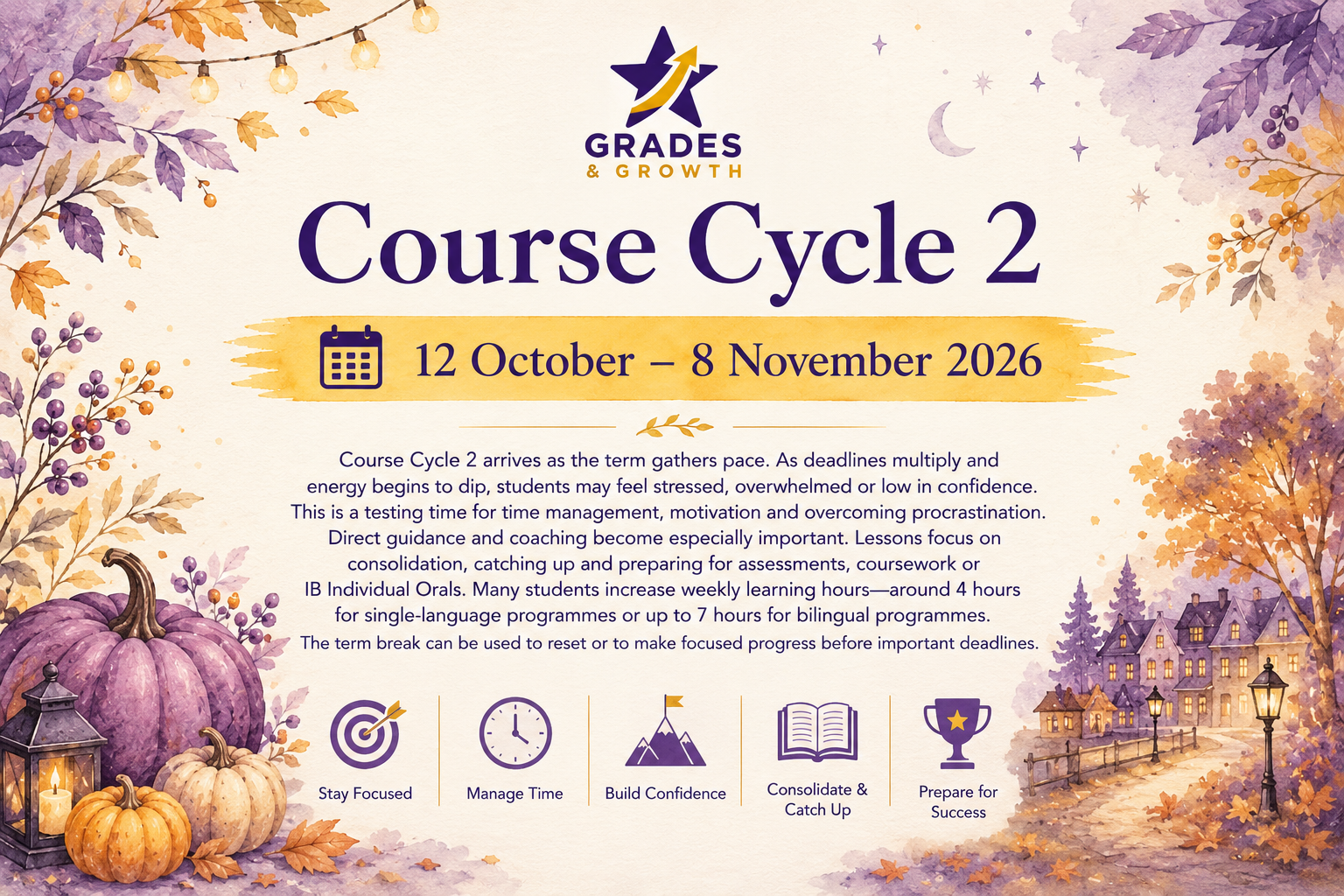
Course Cycle 2
Course Cycle 2 arrives as the term begins to gather pace. Deadlines multiply, assessment pressure rises, and students may start to feel that they are juggling too many demands at once. This is often a testing period for time management, confidence and motivation.
Students who are unsure of their progress can become hesitant, lose momentum or procrastinate when tasks begin to feel overwhelming. Course Cycle 2 therefore places greater emphasis on direct guidance and coaching, helping students break work into manageable steps, understand their own motivational struggles and keep their spirits up when pressure builds.
Lessons focus on consolidation, catching up and preparing for upcoming assessments, coursework and IB Individual Orals. Depending on need, many students increase their guided learning to around four hours per week for a single-language programme or up to seven hours for a bilingual programme.
The term break can offer useful breathing space. Some students may need time to rest and reset, while others may benefit from using the break to regain control, meet approaching deadlines and prevent unfinished work from snowballing.
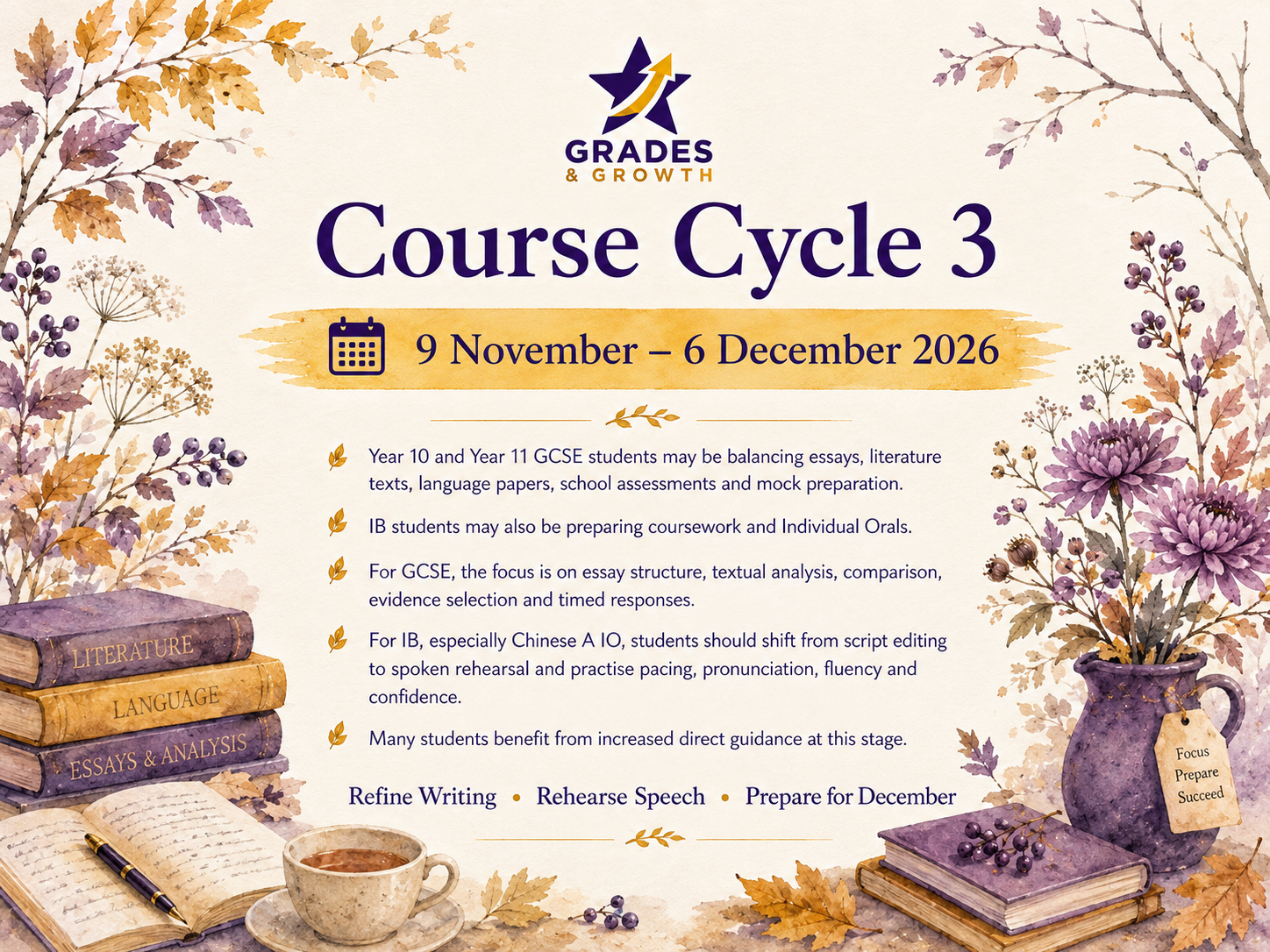
Course Cycle 3
By November, the academic term is firmly under way and assessment pressure often intensifies. Year 10 and Year 11 GCSE students may be balancing essays, literature texts, language papers, school assessments and mock preparation, while IB students may also be preparing coursework and Individual Orals.
For GCSE students, Course Cycle 3 is a useful point to strengthen essay structure, textual analysis, comparison, evidence selection and timed responses before end-of-term assessments. Recurring weaknesses from earlier work can be identified and corrected before they become habits.
For IB students preparing for an IO, especially Chinese A, this cycle should also include substantial spoken practice. Students sometimes spend too much time polishing written scripts and underestimate the IO as a public-speaking task. Those more accustomed to academic presentations in English may discover that speaking Chinese fluently under pressure requires separate rehearsal. Direct guidance can help with pacing, pronunciation, fluency, expression and recovering confidently when a response does not go exactly as planned.
Across both GCSE and IB, Course Cycle 3 focuses on consolidating skills, refining written work, preparing for assessments and reviewing progress from the first half of the term. Many students benefit from increased direct-guidance hours at this stage so that weaknesses can be addressed before December.
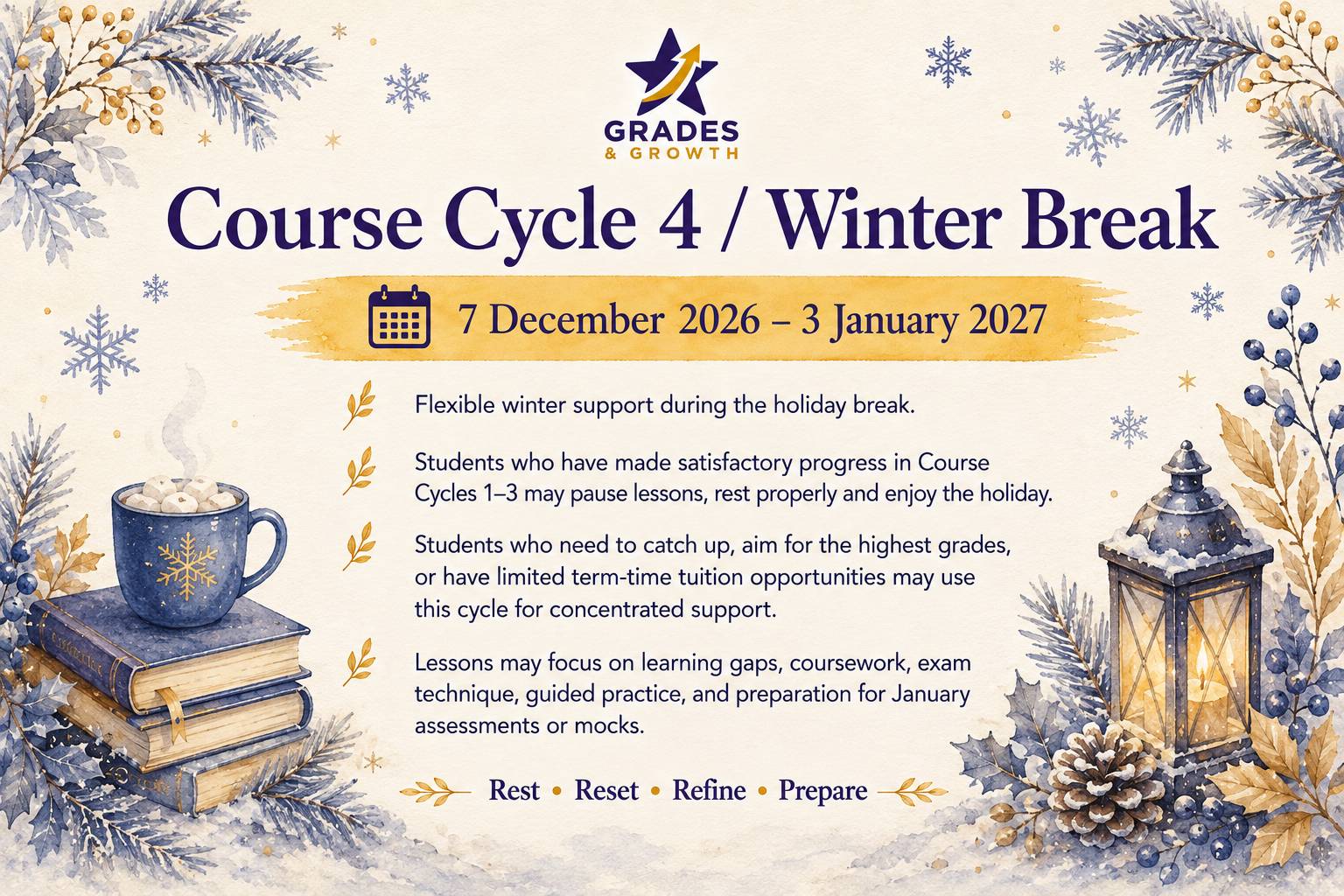
Course Cycle 4 / Winter Break
Course Cycle 4 overlaps with the winter break and is intentionally more flexible. Students who have completed Course Cycles 1–3 with satisfactory progress may choose to pause regular lessons, rest properly and enjoy the holiday, particularly if they are already working securely towards their target grades.
Students who need to catch up, want to push towards the highest grades, or have limited opportunities for intensive tuition during term time, including boarding-school students, may instead use Course Cycle 4 for concentrated support.
Lessons can focus on closing learning gaps, refining coursework, strengthening exam technique, completing guided practice and preparing for January assessments or mocks. For these students, the winter break can provide valuable uninterrupted time for focused academic work before the new term begins.
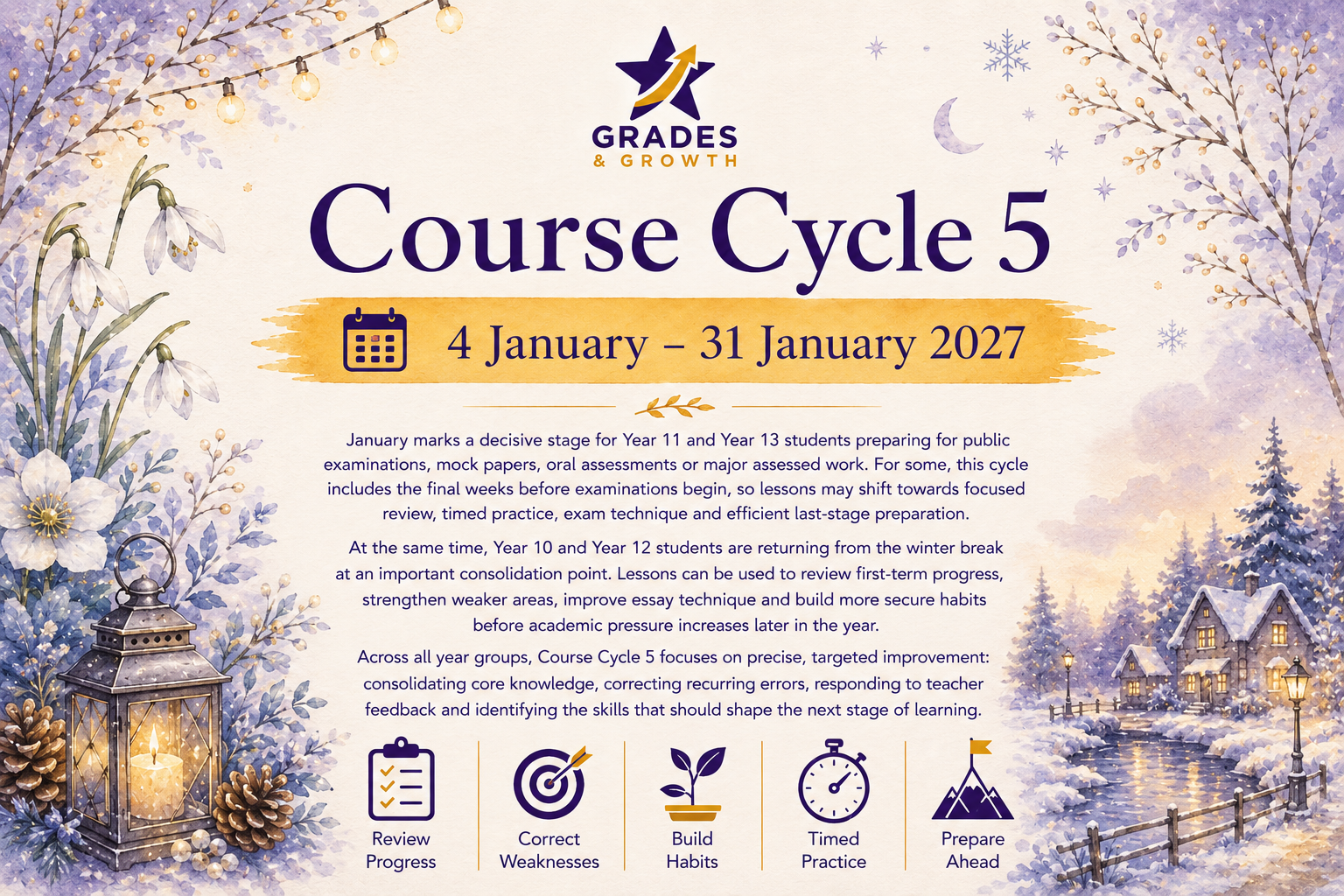
Course Cycle 5
January marks a decisive stage for Year 11 and Year 13 students, particularly those preparing for IGCSE, GCSE, A Level or IB assessments. For some, this cycle includes the final weeks before examinations, mock papers or major assessed work.
Course Cycle 5 focuses on precise, exam-directed preparation: consolidating core knowledge, correcting recurring errors, refining essay technique, completing timed practice and strengthening responses under exam conditions.
For students whose examinations fall during this period, lessons can shift towards final review, confidence-building and efficient last-stage preparation. For others, January is an important opportunity to analyse mock results, respond to teacher feedback and sharpen the learning plan for the months ahead.
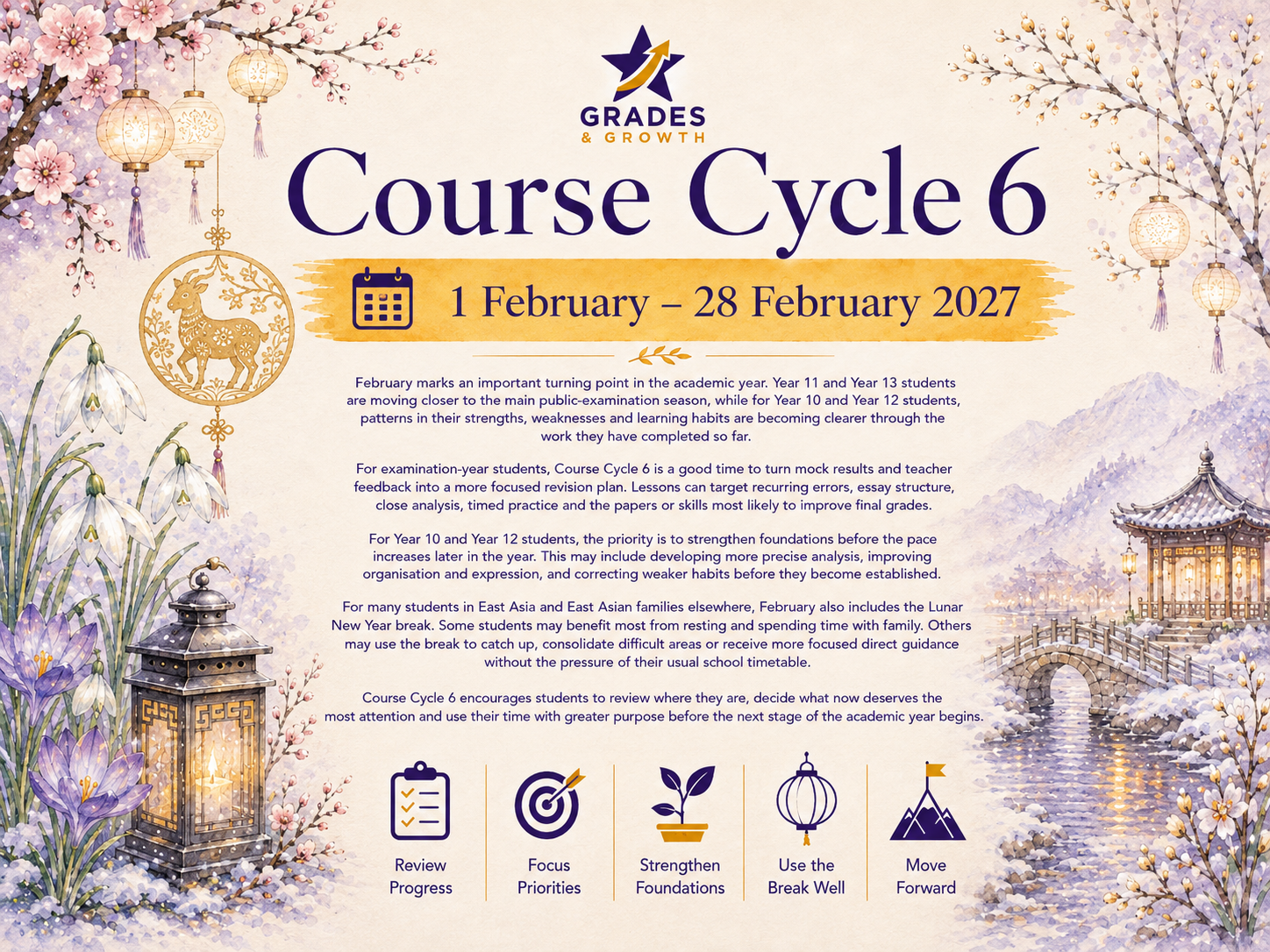
Course Cycle 6
February marks an important turning point in the academic year. Year 11 and Year 13 students are moving closer to the main public-examination season, while for Year 10 and Year 12 students, patterns in their strengths, weaknesses and learning habits are becoming clearer through the work they have completed so far.
For examination-year students, Course Cycle 6 is a good time to turn mock results and teacher feedback into a more focused revision plan. Lessons can target recurring errors, essay structure, close analysis, timed practice and the papers or skills most likely to improve final grades.
For Year 10 and Year 12 students, the priority is to strengthen foundations before the pace increases later in the year. This may include developing more precise analysis, improving organisation and expression, and correcting weaker habits before they become established.
For many students in East Asia and East Asian families elsewhere, February also includes the Lunar New Year break. Some students may benefit most from resting and spending time with family. Others may use the break to catch up, consolidate difficult areas or receive more focused direct guidance without the pressure of their usual school timetable.
Course Cycle 6 encourages students to review where they are, decide what now deserves the most attention and use their time with greater purpose before the next stage of the academic year begins.
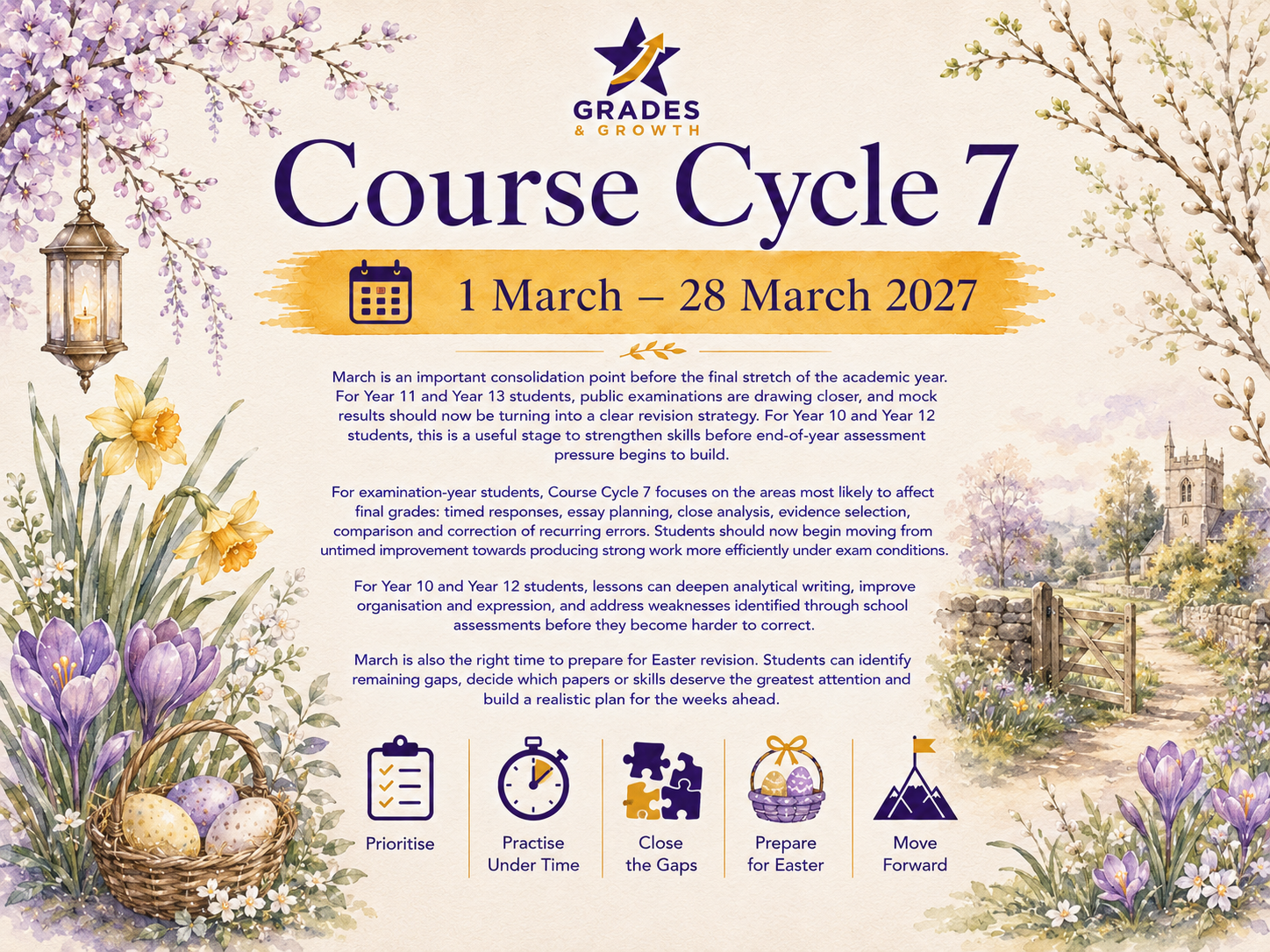
Course Cycle 7
Course Cycle 7 leads into the Easter break, making it a particularly flexible point in the academic year.
For Year 10 and Year 12 students, this can be a good time to adjust the intensity of study. Those who have made steady progress may choose to reduce their weekly learning hours and take more time to rest. Students who need to catch up, strengthen essay writing or prepare for end-of-year assessments may instead increase their hours and use the break for more focused support.
For Year 11 and Year 13 students, the Easter holiday often becomes a decisive revision period before public examinations. This is when many students begin to pull their preparation together, turn mock feedback into action and focus more seriously on the weaknesses that could still affect their final grades.
Lessons may therefore prioritise timed responses, essay planning, close analysis, evidence selection, oral preparation and correction of recurring errors. Direct guidance can also help students decide what deserves the most attention rather than trying to revise everything at once.
Course Cycle 7 is about using the Easter break according to need: rest when progress is secure, or increase focused preparation when the examination season is approaching.
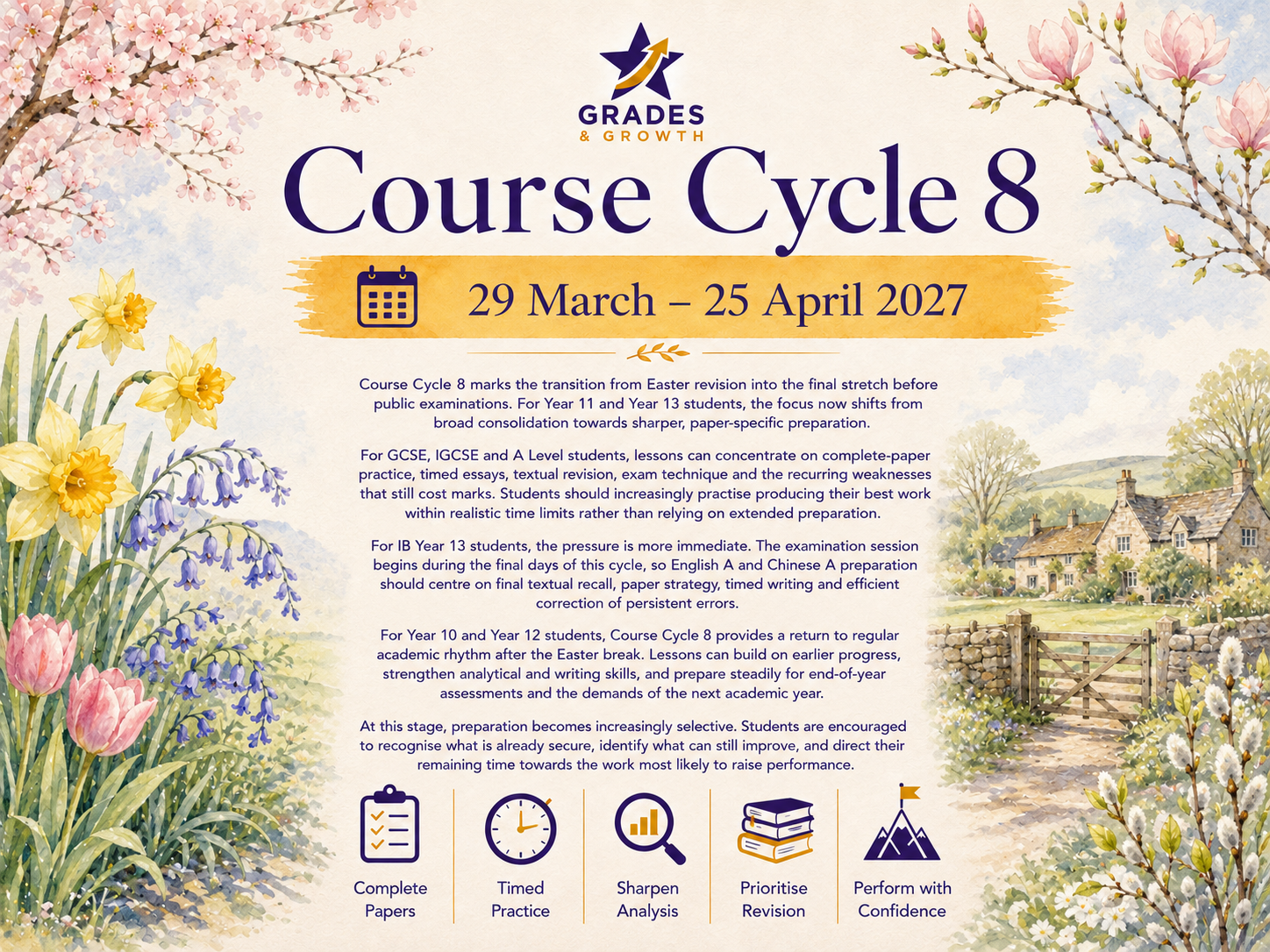
Course Cycle 8
Course Cycle 8 marks the transition from Easter revision into the final stretch before public examinations. For Year 11 and Year 13 students, the focus now shifts from broad consolidation towards sharper, paper-specific preparation.
For GCSE, IGCSE and A Level students, lessons can concentrate on complete-paper practice, timed essays, textual revision, exam technique and the recurring weaknesses that still cost marks. Students should increasingly practise producing their best work within realistic time limits rather than relying on extended preparation.
For IB Year 13 students, the pressure is more immediate. The examination session begins during the final days of this cycle, so English A and Chinese A preparation should centre on final textual recall, paper strategy, timed writing and efficient correction of persistent errors.
For Year 10 and Year 12 students, Course Cycle 8 provides a return to regular academic rhythm after the Easter break. Lessons can build on earlier progress, strengthen analytical and writing skills, and prepare steadily for end-of-year assessments and the demands of the next academic year.
At this stage, preparation becomes increasingly selective. Students are encouraged to recognise what is already secure, identify what can still improve, and direct their remaining time towards the work most likely to raise performance.
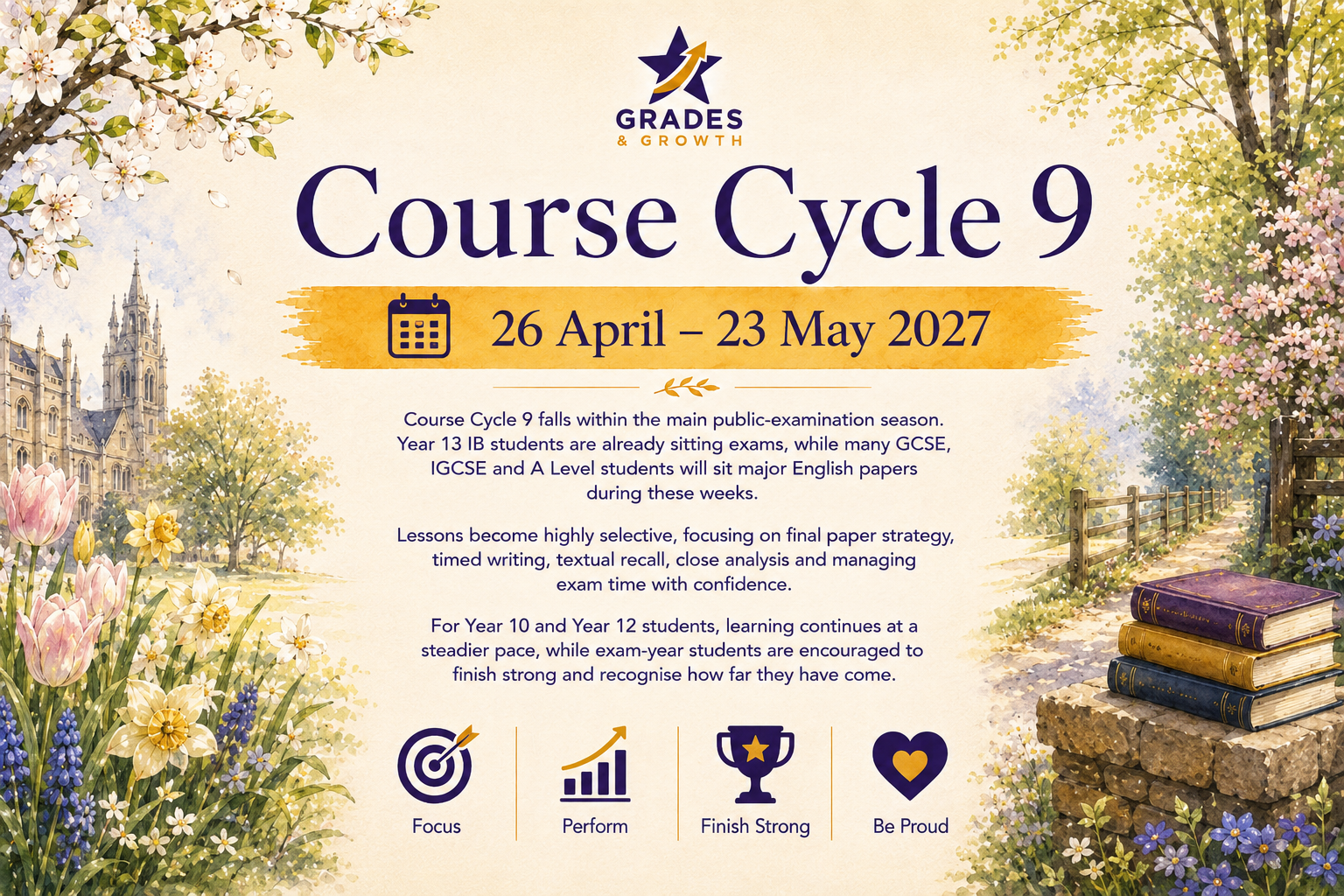
Course Cycle 9
For many Year 13 IB students, this cycle includes their final weeks of regular teaching before the May examinations. With IB English A and Chinese A exams approaching, the focus shifts firmly towards consolidation, timed practice and strategic revision.
Course Cycle 8 helps students decide what deserves their attention most. Lessons can target weaker papers, refine essay planning, strengthen textual analysis, practise responses under timed conditions and review recurring errors from previous work.
Time management is one of the greatest skills the IB develops. At this stage, using limited time well matters as much as studying hard. Students are guided to prioritise effectively, balance revision across subjects and enter the examination period with a clear, manageable plan.
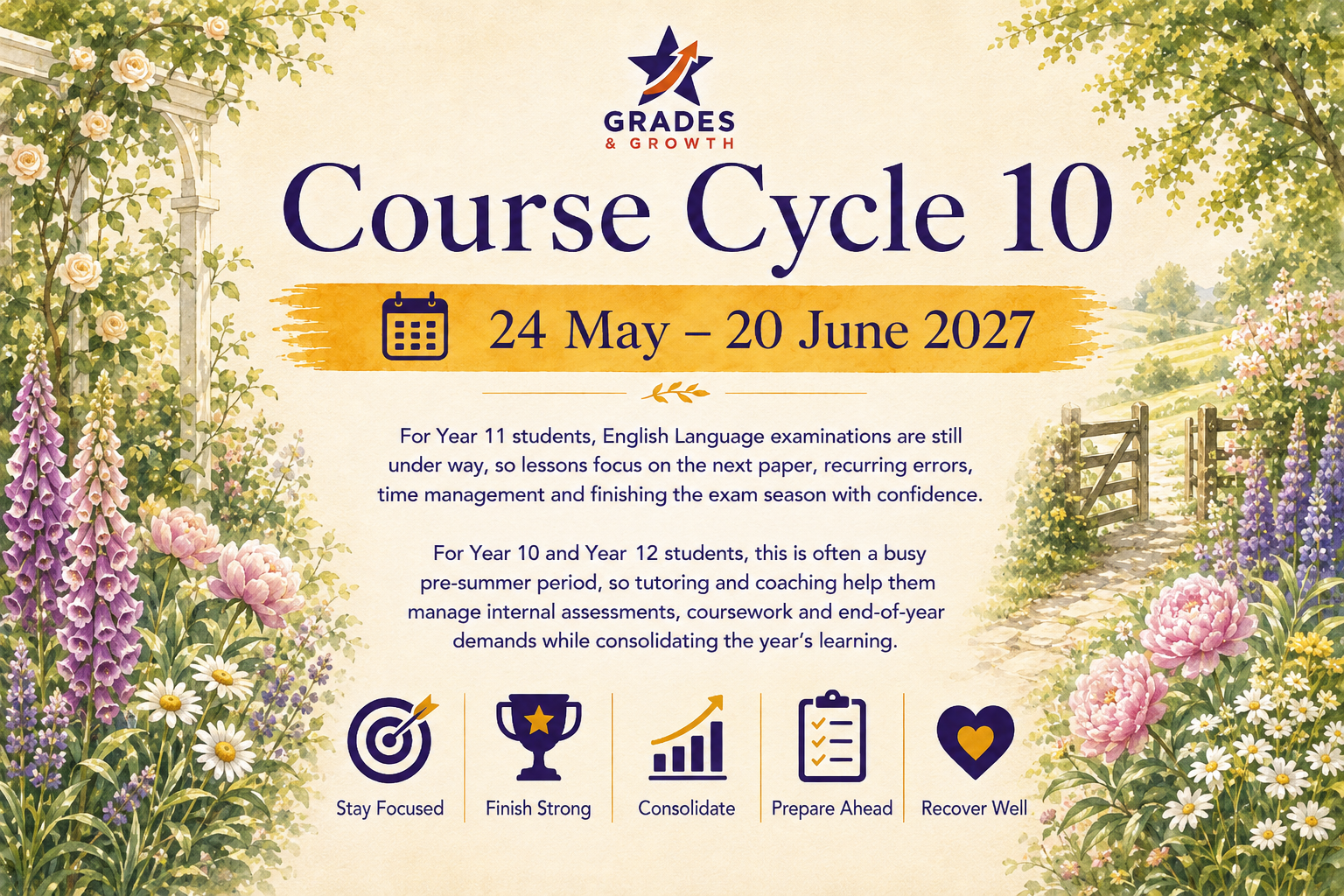
Course Cycle 10
For many Year 11 students, Course Cycle 10 begins at a decisive point in the GCSE and IGCSE examination season. English Literature papers may already be behind them, while English Language remains very much in progress. For major UK boards including AQA and Pearson Edexcel, the first English Language paper falls on 24 May and the second on 8 June. Pearson International GCSE English Language A follows the same dates.
At this stage, lessons become highly focused. Students can review the next paper, practise the question types that still cause difficulty, sharpen time management and correct recurring errors without adding unnecessary workload between examinations. Once the final English paper is completed, attention can shift towards rest, recovery and recognising the work that has brought them to the end of the course.
For Year 13 students, the picture varies by examination board and subject. Many AQA A Level English students will already have completed their written English papers by 20 May, before Course Cycle 10 begins, while some other specifications continue later into the summer series.
Year 10 and Year 12 students, meanwhile, may be entering one of the busiest periods before summer. Internal examinations, end-of-year assessments, essays, coursework and school deadlines often converge at this point. Course Cycle 10 can therefore focus on consolidating the year’s learning, responding to feedback and finishing the academic year strongly without creating avoidable pressure.
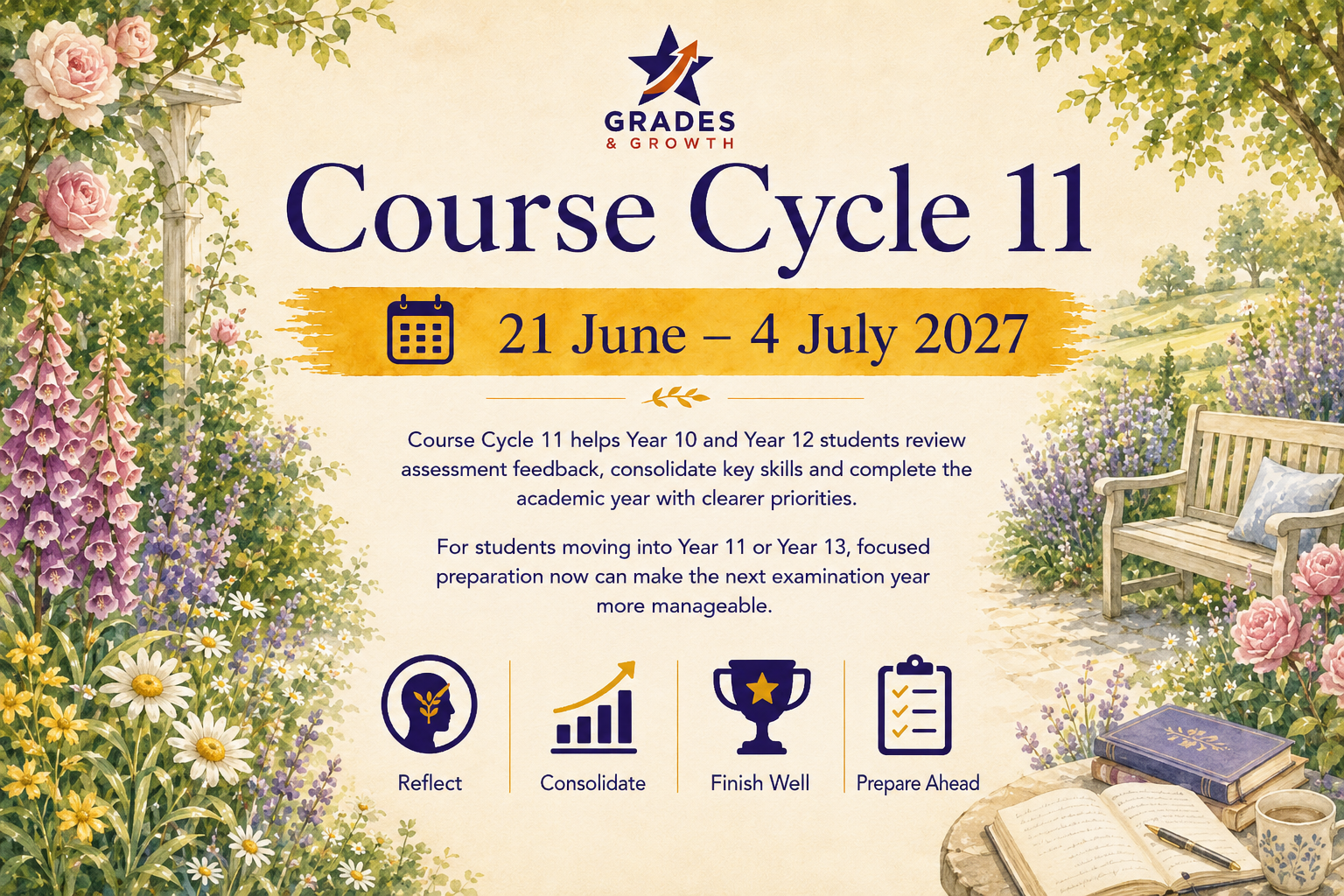
Course Cycle 11
By late June, the public-examination season is drawing to a close. GCSE students will generally have completed their exams, while a small number of Year 13 students may still be sitting their final A Level papers during the opening days of this cycle.
For Year 10 and Year 12 students, however, the academic year is often still busy. Internal examinations, end-of-year assessments, essays, coursework and school projects may continue before the summer break.
Course Cycle 11 focuses on finishing the year well rather than simply adding more work. Lessons can be used to review assessment feedback, address weaknesses that have become clear during the year, complete outstanding work and consolidate the reading, writing and analytical skills students will need next year.
For students moving into Year 11 or Year 13, this is also a useful point to look ahead. Focused preparation before the summer can clarify priorities for the examination year ahead, while students who have already made secure progress may choose a lighter workload as the school year comes to an end.
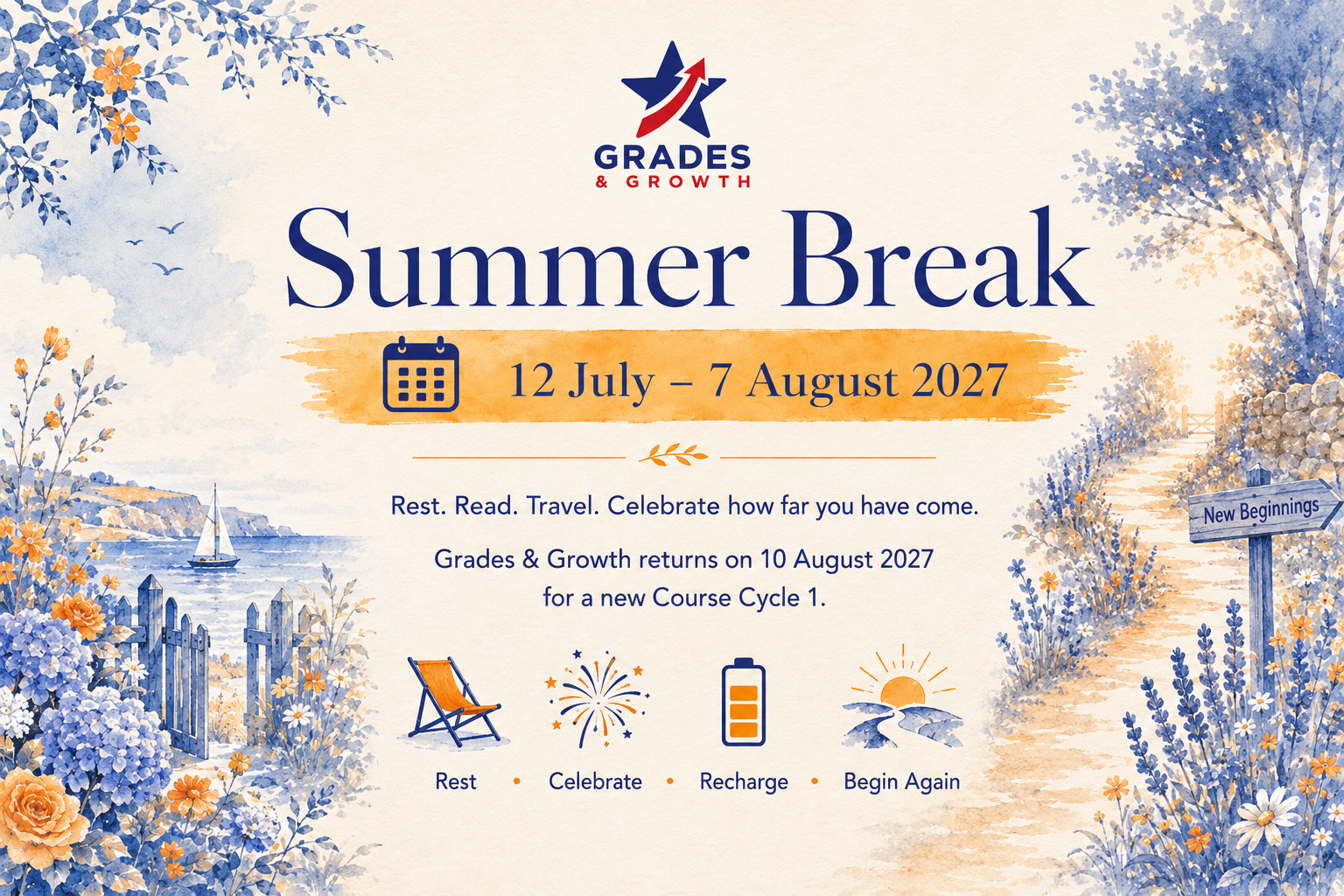
Summer Break
The academic year finishes with a well-earned summer break. After months of lessons, coursework, assessments and examinations, students can finally slow down, enjoy the longer days, read for pleasure, travel, spend time with family and friends, and simply have fun.
For students moving into a new examination year, there is no need to rush ahead. This is a chance to celebrate how much they have achieved, recharge properly and return with fresh energy, clearer priorities and renewed confidence.
Grades & Growth will be back on 10 August 2027 for a new Course Cycle 1 and the beginning of another academic year.