
GCSE & IGCSE ENGLISH · ONE-TO-ONE · ONLINE

Behind in English?
Start with a clear plan.
Tutoring and coaching in English Language and Literature, shaped around the student’s starting point. We work on the gaps, practise the skills and help students make better decisions for themselves.
Whether the goal is catching up or aiming higher, the first step is to understand what is getting in the way.
THE APPROACH
Flexible thinking.
Clearer writing.
We work to understand each student’s strengths, interests and ways of thinking. The aim is to help them read closely, organise ideas and adapt their writing when the question changes.
Lessons connect explanation, practice and feedback. Students learn why a choice works, then try it independently, without relying on one formula for every task.
UNDERSTAND
01/
Read with attention.
Build vocabulary, notice a writer’s choices and support an interpretation with evidence.
REPAIR
02/
Work on what costs marks.
Target recurring difficulties with spelling, sentence structure, punctuation and paragraphing.
PRACTISE
03/
Respond to the task.
Use timed practice and the relevant assessment criteria to plan, write and review an answer.
APPLY
04/
Make the next choice.
Use feedback, explain a revision and test the same skill on unfamiliar work.
A SAMPLE FIRST LESSON
One word. A clearer way to think.
We begin with a short reading and writing task, listen to the student’s explanation and identify where support is needed. This example shows how close reading can lead to more precise writing and independent checking.
-
![]()
01 / READ
Notice before deciding.
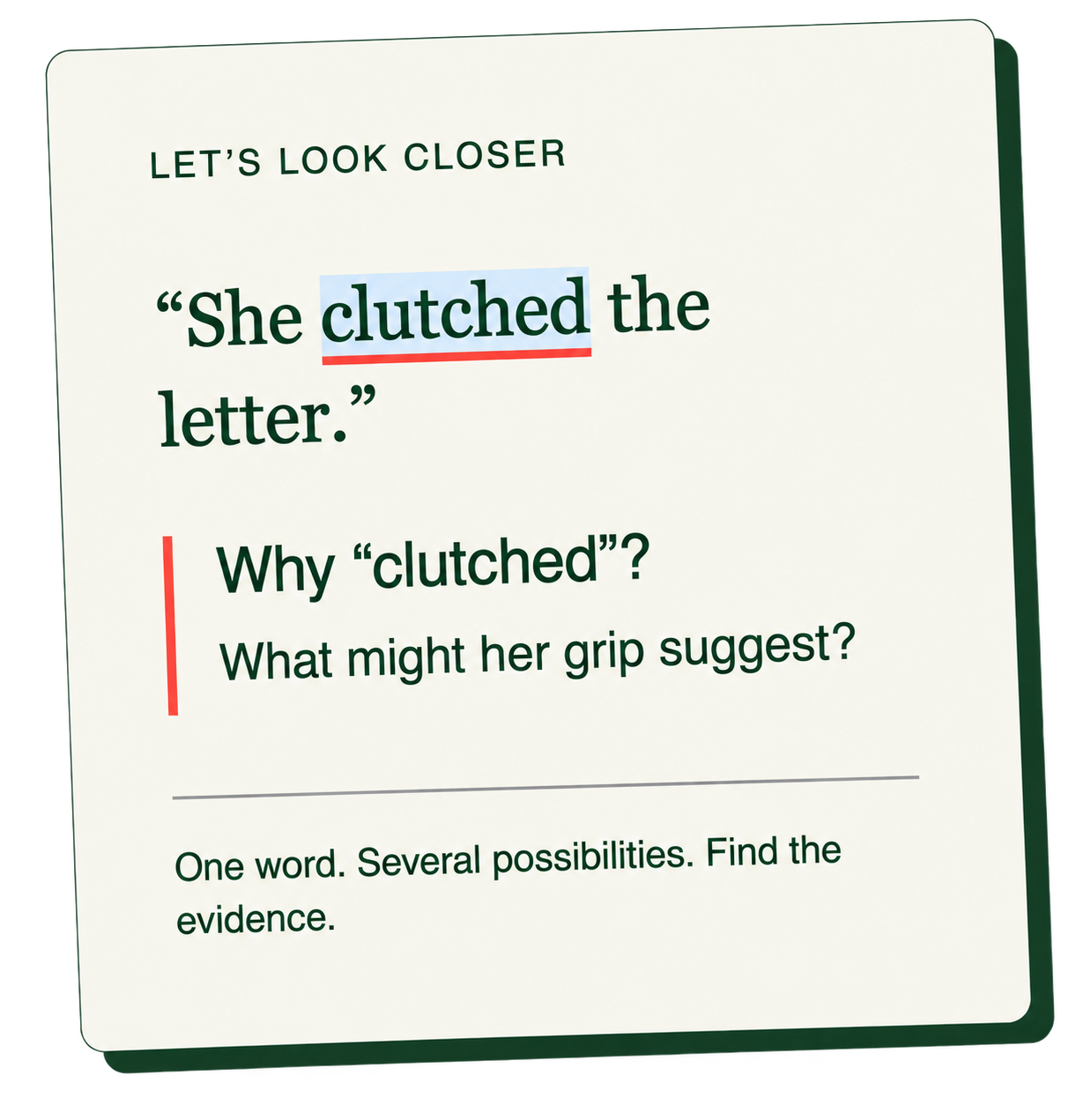
Compare held with clutched. Clutched means held tightly. What might it suggest here, and what else would we need to read?
Try it: Explain what the verb tells you. Then suggest a different possible interpretation.
-
![]()
02 / WRITE
Make the reasoning visible.
Turn a general comment into an explanation. Work on one sentence problem at a time, including the difference between anxiety and anxious.
Try it: Revise a short response and explain why the new version is clearer.
-
![]()
03 / CHECK
Use the skill for yourself.
Apply the same questions to a new sentence. When the context changes, the interpretation may need to change too.
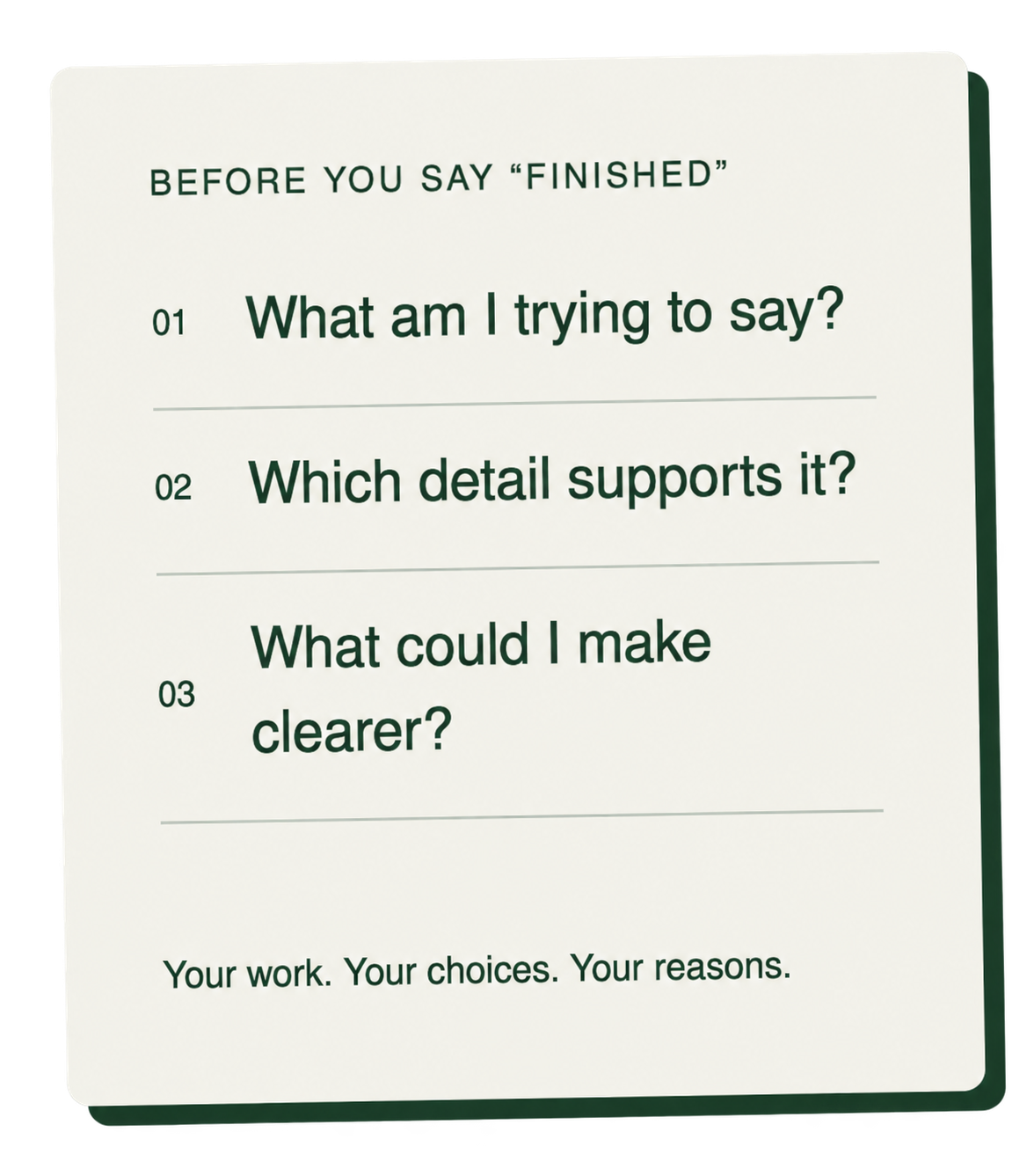
Try it: Check the evidence, sentence boundaries and spelling before calling the work finished.
Open the sample activity and model response

What the student
takes away
A short reading and writing sample, a revised response, and two specific priorities for practice. The pace and level of support should match the student’s needs.
REPORTED STUDENT PROGRESS
Different starting points.
Meaningful progress.
A high grade and a much-needed pass can both matter.

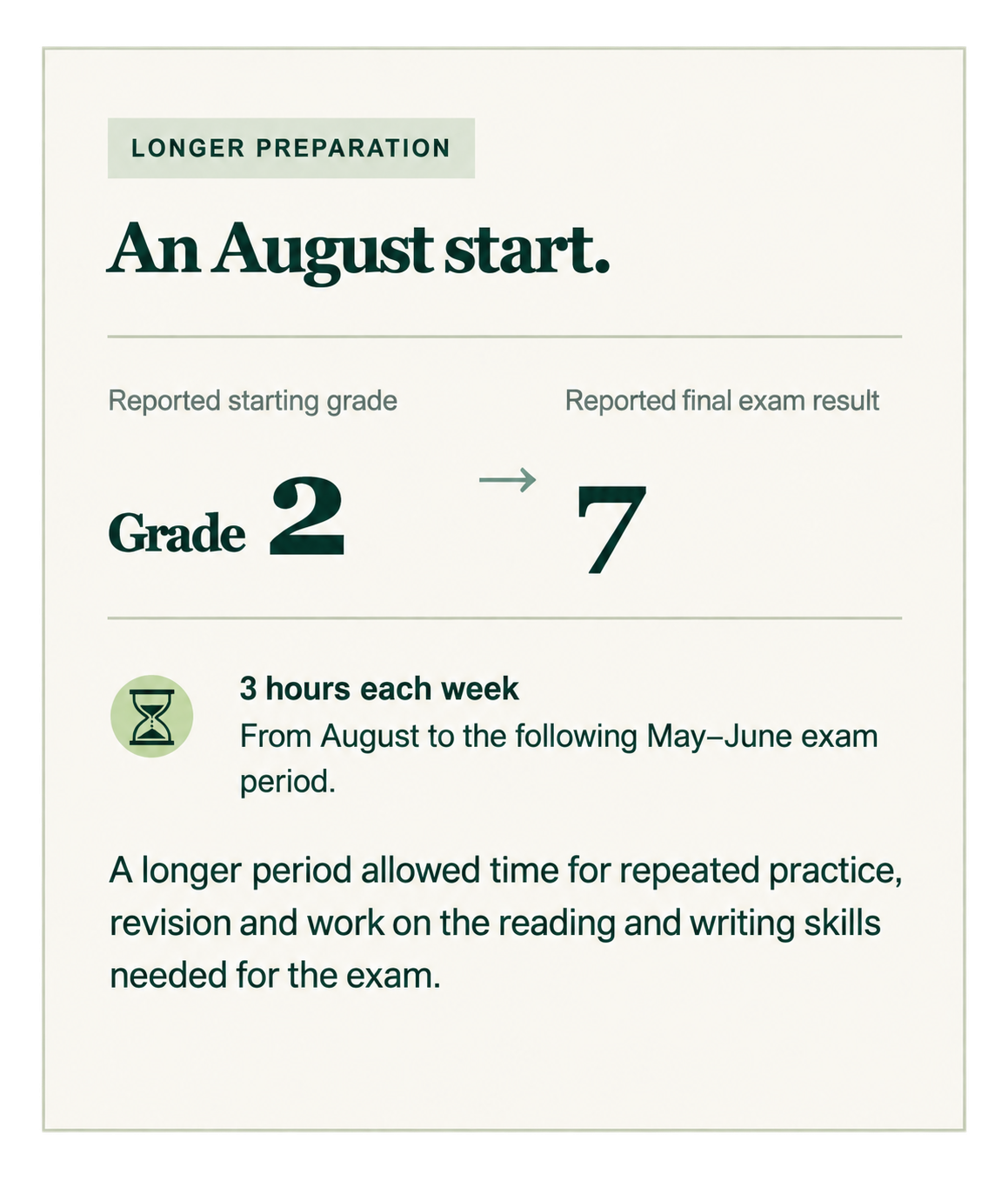
Disclaimer: Starting assessments, preparation periods and weekly support differ. These are separate examples, not a monthly progress record or a like-for-like comparison of tuition hours.
About the dates and figures
The exam dates supplied for these examples are 11, 19 and 21 May, and 5 June. They describe the examples discussed; they are not a timetable for a future exam series. The year, exam board, subject-level results and student counts need to be added from the original records before publication.
The numerical grade scale is retained here. Letter grades have not been presented as exact equivalents. No intermediate grades or success percentages have been invented.

THE ATTITUDE BEHIND THE WORK
A miracle? No.
A practical response.
Grades & Growth does not promise miracles or a pass simply for enrolling. Progress takes hard work, from student and tutor alike.
We bring diligence, determination and a can-do attitude to that work. We ask how the student thinks, what motivates them and which difficulties keep costing marks. Then we work on those difficulties through teaching, practice and feedback.
Confidence comes from progress students can see.
FEES & SUPPORT
One fixed course fee.
A clear support plan.
Know what your child’s course includes before you enrol. Discuss the starting point, available time and appropriate level of support at the consultation.
Clear before you commit.
The fee information should set out the course-cycle dates, lesson allocation, learning resources, feedback, and cancellation or rescheduling terms.
The six-hour example above describes intensive support in a past case. It should not be read as the weekly allocation for every course.
QUESTIONS BEFORE YOU BEGIN
Let’s make the
next step clear.
-
With recent schoolwork, a short reading and writing task, and a conversation about where the student gets stuck. These help identify the difficulties to work on first.
-
There may still be useful work to do. We look at the time available, the student’s starting point and the preparation required, then discuss what can realistically be addressed.
-
Tutoring explains and practises the subject. Coaching helps the student plan the work, use feedback and make decisions more independently.
-
No single structure suits every task. Students learn to choose evidence, organise an explanation and adapt their approach to the question, text and purpose.
-
The student’s year group, exam board and specification, exam dates, latest school grade and one recent piece of marked work. Please remove other students’ details before sharing school documents.
-
The agreed fee, lesson allocation, support included and relevant terms should be clear before enrolment. Use the existing Tuition Fees and Course Details pages for the final published information.